
Mexico Day of the Dead Traditions, Symbols and Meanings

Día de Muertos, or Day of the Dead, is one of Mexico’s most vibrant and meaningful celebrations. It’s a time when families honor and welcome back the souls of departed loved ones.
Rooted in pre-Hispanic beliefs and blended with Catholic traditions, it’s a unique expression of love, remembrance, and continuity between life and death.
Across Mexico, Día de Muertos is celebrated through diverse traditions, symbols, and rituals, from intricate altars and cemetery vigils to marigolds and sugar skulls that brighten the path between worlds.
I’ve seen how each region brings its own beauty and depth to the holiday. In this article, we’ll explore the most iconic Day of the Dead traditions in Mexico, along with the symbols and meanings that make this celebration one of humanity’s most poetic reflections on life and memory.

This article may contain affiliate links. This means if you click a link on my website and make a purchase, I earn a commission at no additional cost to you. For full information, please see my disclaimer here.
5 Day of the Dead Traditions
While Día de Muertos is celebrated differently across Mexico, the heart of it lies in a shared goal: to honor and reconnect with loved ones who have passed away.
These Day of the Dead traditions and customs represent the many ways communities keep that bond alive.
1. Build an Altar
At the center of the home during Día de Muertos stands the ofrenda, a carefully built altar dedicated to the souls of the departed. Each level and item placed upon it carries meaning.
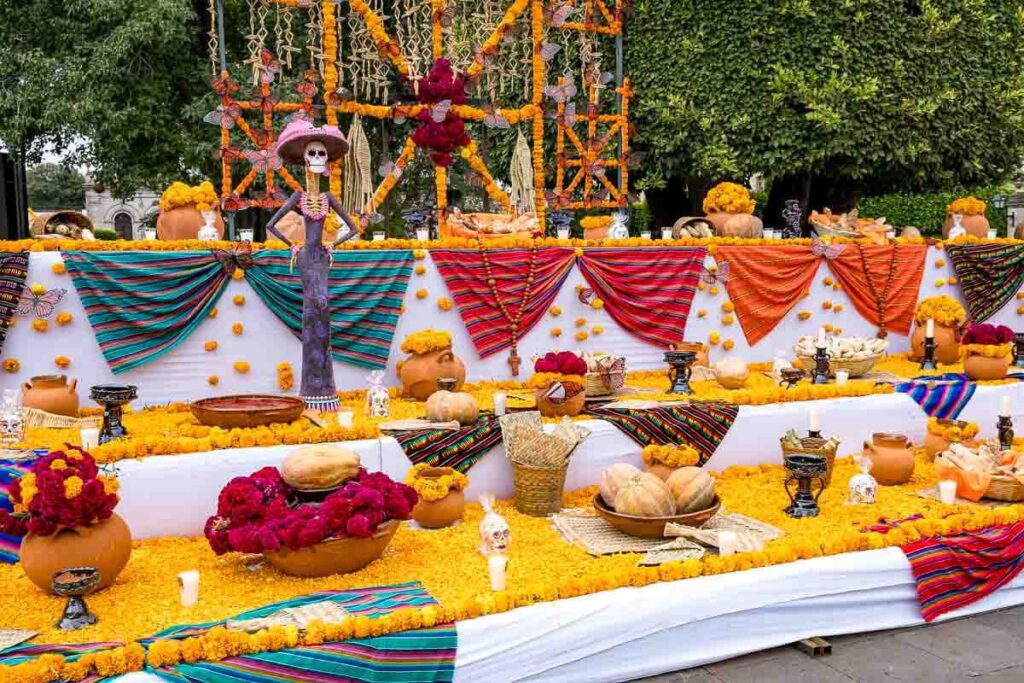
Photos, candles, marigolds, favorite mementos, and food help to guide the spirits back to the world of the living. Families include the deceased’s favorite dishes, drinks, or personal objects, turning the altar into a bridge of love and memory.
Want to know what each element represents? Learn in our article about how to make your own Day of the Dead altar.
2. Clean the Gravesite
Before the celebrations begin, families visit the cemetery to clean and decorate the graves of their loved ones. Weeds are pulled, gravestones are washed, and fresh flowers, usually marigolds, are placed.
This act of care is both practical and symbolic. It prepares the resting place for the spirits’ return and reflects deep respect for ancestors.
3. Create a Sand Rug (Tapete de Arena)

In states like Oaxaca, Michoacan and Puebla, locals create tapetes de arena, or sand rugs. These intricate designs are made from colored sand, flowers, seeds, and sawdust.
These ephemeral artworks often depict religious imagery, skeletons, or floral motifs, and are laid out in front of altars, in plazas, or along processional routes.
4. Spend the Night in the Cemetery
Perhaps the most moving Día de Muertos ritual takes place in the cemeteries. Families gather at night, lighting thousands of candles that illuminate the graves. They share food, music, and stories until dawn, keeping vigil for the spirits who return home.

This overnight stay transforms grief into celebration. The cemetery glows with warmth and reverence, blurring the boundary between the living and the dead. You can learn more about this breathtaking experience in our guide to Day of the Dead in Michoacán.
5. Day of the Dead Parades: Comparsas + Muerteadas

Modern Mexico Day of the Dead celebrations often include parades known as a comparsa or muerteada. These processions feature costumed participants, traditional music, and dramatic performances inspired by death and rebirth.
While the parades have become more theatrical, especially in cities like Oaxaca and Mexico City, they remain rooted in cultural storytelling and local identity.
Each region’s comparsas carry their own personality. The parades during Day of the Dead in Oaxaca are lively and artistic. And Mexico City’s massive parade (inspired in part by the James Bond film Spectre) draws thousands of participants every year.
10 Day of the Dead Symbols and Their Meanings
Beyond its customs and traditions, Día de Muertos in Mexico is filled with symbols that convey deep meaning. From flowers and food to mythological creatures, these elements embody Mexico’s view of death as a continuation of life.
For us, death is not an ending. It’s a transformation.
6. Monarch Butterflies

Every autumn, millions of Monarch butterflies migrate to central Mexico, arriving around the time of Día de Muertos. In some indigenous belief systems these butterflies are believed to carry the souls of the departed. Their arrival marks a sacred sign of renewal and continuity between worlds.
7. Day of the Dead Flowers
The cempasúchil, or Mexican marigold, is one of the most recognizable Day of the Dead symbols. Its vivid orange color and strong scent are believed to guide spirits home. Petals are scattered along pathways or used to decorate altars and graves.

It was always my job as a child to pluck the petals off the marigolds and scatter them as a path from the sidewalk through the front door and to the foot of our family altar. It lets spirits know they are welcome and that there is an ofrenda waiting for them.
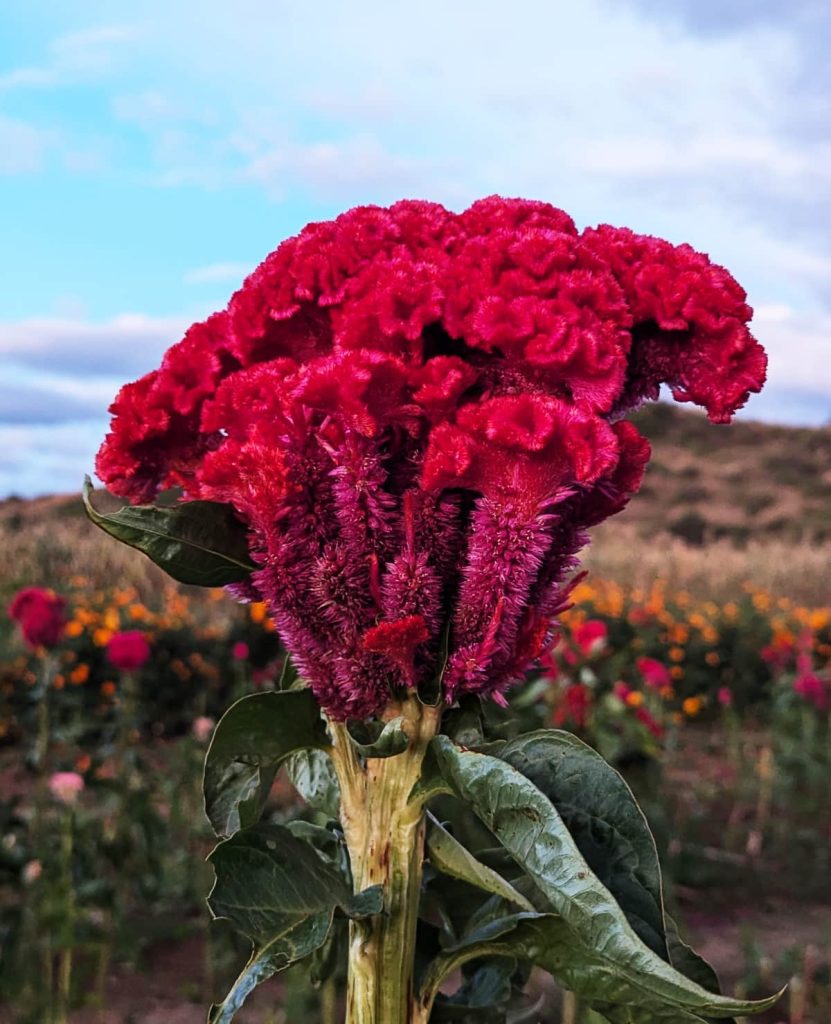
Flor de terciopelo, also known as cockscomb in English, is another of the most common flowers for Día de Muertos. You will often see vendors selling bundles of these velvety flowers throughout October and early November. They are used to decorate altars and gravesites as well.
8. Pan de Muerto (Day of the Dead Bread)
Pan de muerto, or “bread of the dead,” is a soft, sweet bread decorated with bone-shaped dough. It’s often placed on altars and shared among family members during the celebration. The bread represents the cycle of life and death and is sustenance for both the living and the spirits.
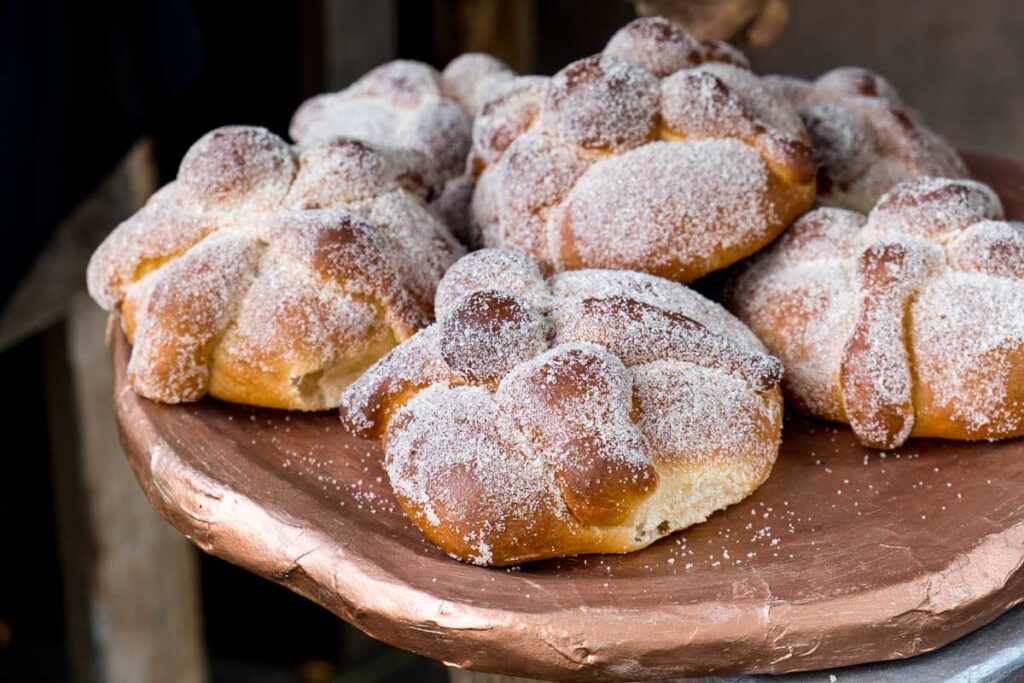
When I was a kid, we always made our own pan de muerto at home. I had the distinctive job of using a molcajete to grind anise seeds, orange peel and other spices used to flavor the pan de muerto dough. You can make it in any shape, but the “skull and crossbones” are the traditional shapes and it’s usually dusted with white or pink sugar.

Aside from this most common version of day of the dead bread, there are a few varieties in other parts of Mexico. Oaxaca has the most variations, including bread with faces peeking out from the dough, breads shaped like a person, and flavor variations including guava and other fruits, nuts and seeds.
Pan de muerto is one of the most traditional Day of the Dead foods. Some places even offer a modern twist stuffed with cempasúchil (marigold) cream. Although not traditional, these treats can be fun to try!
9. Copal Incense

Copal, a resin incense used since pre-Hispanic times, is burned on altars to purify the space and attract the spirits.
Its rich, earthy aroma symbolizes the divine and creates a sacred environment. The rising smoke is thought to carry prayers to the heavens and serve as a spiritual beacon.
10. Mictlán
In Aztec cosmology, Mictlán is the underworld and the final resting place for most souls. According to legend, the dead must pass through nine levels before reaching peace. Modern interpretations of Día de Muertos often reference Mictlán as the ancestral realm from which spirits return during the celebration.
11. Xoloitzcuintli
The Xoloitzcuintli, or Mexican hairless dog, was believed to guide souls safely through the underworld. These loyal companions appear in ancient myths, artwork, and even modern altars as protectors of the dead. Today, the Xolo remains a national symbol of heritage and loyalty.
12. La Catrina
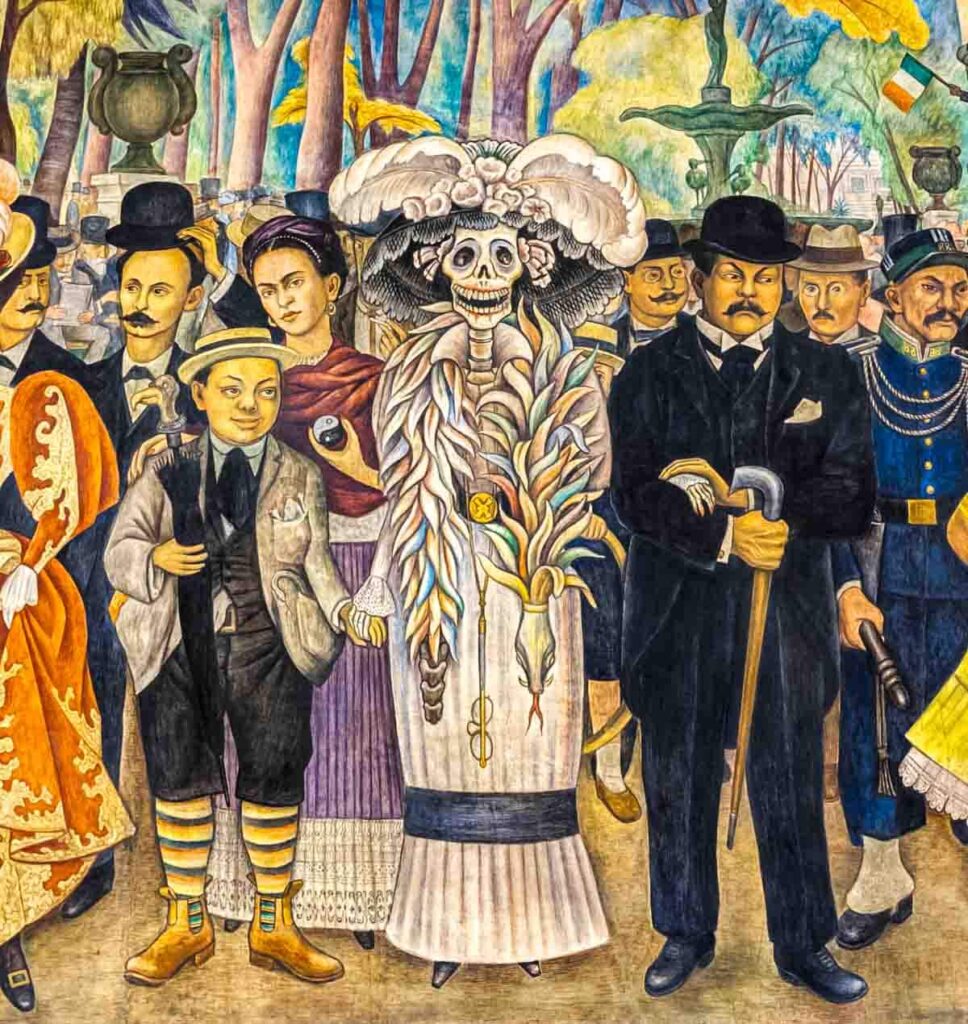
La Catrina, the elegant female skeleton wearing a hat, was created by artist José Guadalupe Posada as social satire in the early 1900s.
She mocks those who aspire to European high society, reminding everyone that death is the great equalizer. Over time, La Catrina has become the iconic symbol of Día de Muertos: graceful, witty, and deeply Mexican.
13. Calaveras (Skulls)
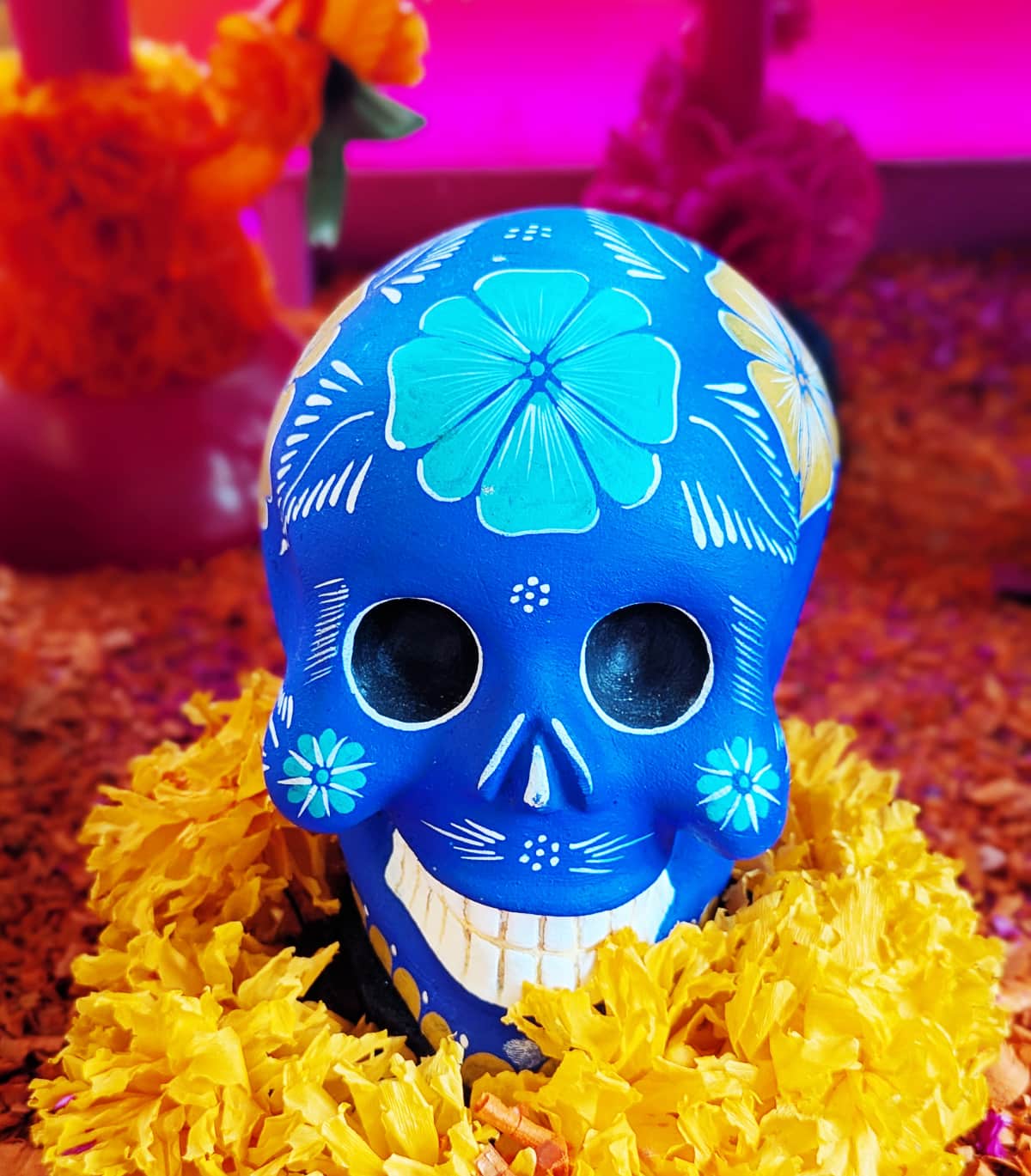
Calaveras, or skulls, represent both death and rebirth. Made from sugar, clay, or chocolate, they’re often decorated with bright colors and the names of loved ones. Rather than morbid, these smiling skulls embody the joy of remembrance and the acceptance of mortality as part of the cycle of life.
14. Calacas (Skeletons)
Calacas are full-bodied skeleton figures that often appear dancing or laughing — a cheerful reminder that death is not to be feared. They’re common in parades, artwork, and crafts, reflecting Mexico’s unique ability to approach mortality with humor and heart.
15. Papel Picado

Look up! When you’re walking through Mexico, you may spot many colorful paper banners strung up above main streets, alleys and plazas. These banners are either paper, or, in modern times, plastic rectangles strung together and decorated with intricate cutouts.
During Muertos you’ll find papel picado in seasonal colors like deep purples, vibrant orange hues, and even black. The designs typically depict marigolds, skulls, or skeletons and can be beautiful (or sometimes humorous) representations of everyday life.
Questions About Day of the Dead Traditions in Mexico
What is the most recognizable symbol for Day of the Dead?
The most recognizable symbol for Day of the Dead is La Catrina. La Catrina is a famous skeleton figure dressed in elegant clothes and a large hat. She was created by José Guadalupe Posada. Her image represents the playful acceptance of death and equality among all people, regardless of status.
What are the flowers for Day of the Dead?
The primary flower for Day of the Dead is the cempasúchil (Mexican marigold). Its vivid orange color and distinct scent are believed to guide the spirits home. Other flowers such as baby’s breath, chrysanthemum, lillies, and red cockscomb are also used for balance and symbolism.
What are the four elements represented in the Day of the Dead celebrations?
The four elements represented in Día de Muertos celebrations incorporate the four natural elements: earth (food offerings), wind (papel picado), fire (candles), and water (a glass of water for the spirits’ thirst). Together, they represent balance and the interconnectedness of life.
How to celebrate the Day of the Dead respectfully?
To celebrate Day of the Dead respectfully, learn about the holiday’s origins, traditions, and symbols. Avoid costumes that mock or stereotype Mexican culture. If you visit cemeteries or altars, do so quietly and with gratitude, and DON’T wear costumes to graveyards. Support local artisans and communities rather than treating the event as a spectacle.
What not to do on Day of the Dead?
Here are some things you should not do on Day of the Dead: Avoid treating Día de Muertos as Halloween because it’s not about horror or fright. Don’t touch or move items on someone’s altar, and never interrupt family rituals in cemeteries. Instead, observe with respect, listen, and appreciate the beauty of remembrance.
Final Thoughts About Mexico Day of the Dead Traditions
Día de Muertos is more than a holiday, it’s a philosophy of life. It reminds us that death does not sever love and that memory is a form of immortality.
From altars glowing with candles and the scent of marigold flowers to the flutter of papel picado in the breeze, Mexico’s Day of the Dead traditions teach us how to honor loss with beauty, gratitude, and joy.
Whether you’re watching comparsa parades in Oaxaca, walking among the butterflies of Michoacán, or simply lighting a candle at home, Día de Muertos offers a universal message: our loved ones never truly leave us.
