How to Make a Day of the Dead Altar (with Meaning)

Creating a Day of the Dead altar is one of the most heartfelt ways to honor your loved ones. But if you’re unfamiliar with the tradition, you might not know which elements belong or why they’re used.
Understanding the meaning behind each offering can turn the process of making an altar into a conversation with someone you miss.
I’ve helped my mother build the ofrenda every year since I was a child. While every family in Mexico honors their dead a little differently, the essence of the altar remains the same.
I’m going to walk you through each element and what it represents so that you can create an ofrenda that actually carries meaning.

This article may contain affiliate links. This means if you click a link on my website and make a purchase, I earn a commission at no additional cost to you. For full information, please see my disclaimer here.
What is an Ofrenda for Day of the Dead?
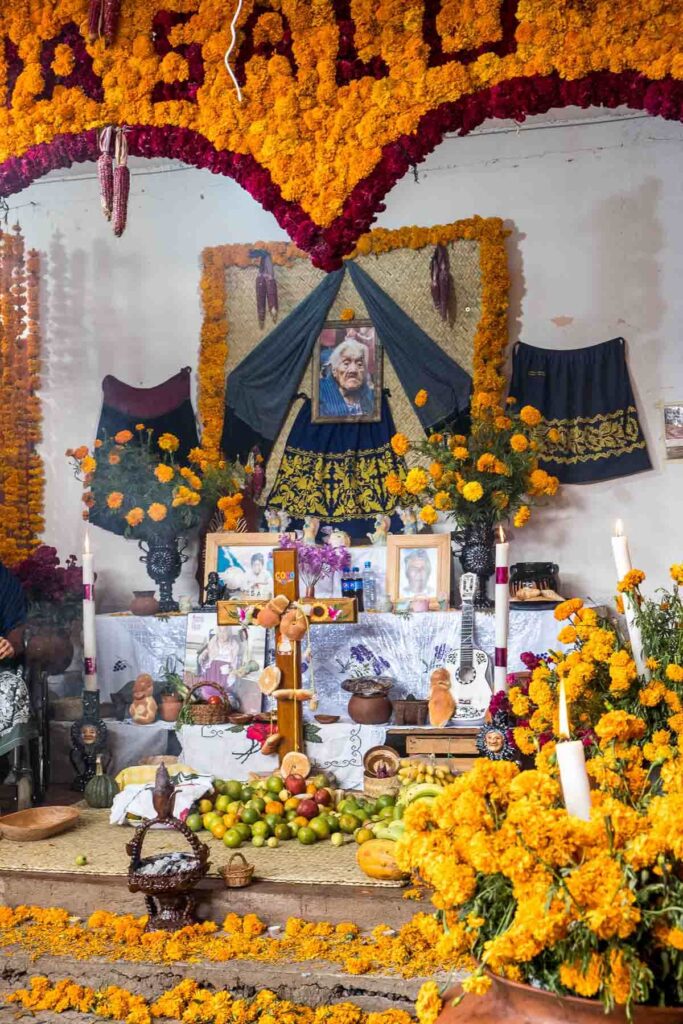
A Day of the Dead ofrenda is an altar created to welcome the spirits of deceased loved ones back to the living world. It’s the centerpiece of Día de Muertos, filled with meaningful items like flowers, food, photographs, and candles meant to guide, nourish, honor and celebrate the returning souls.
An altar is not a display. It’s an offering to the visiting souls.

Families build ofrendas at home, in cemeteries, and in public spaces, especially in cities like Oaxaca and Michoacán where large traditional celebrations take place. Each ofrenda is both personal and traditional, a space to share stories and reconnect with ancestors.
15 Elements of a Day of the Dead Altar
An altar contains a mix of items meant to guide spirits to the home, nourish them after their long journey, and honor their memory.
Below are the core elements you’ll find on a traditional altar for Día de Muertos, as well as a few optional additions that vary by region. Once you know what goes on the altar and why, I’ll walk you through how to put it all together.
1. Flowers
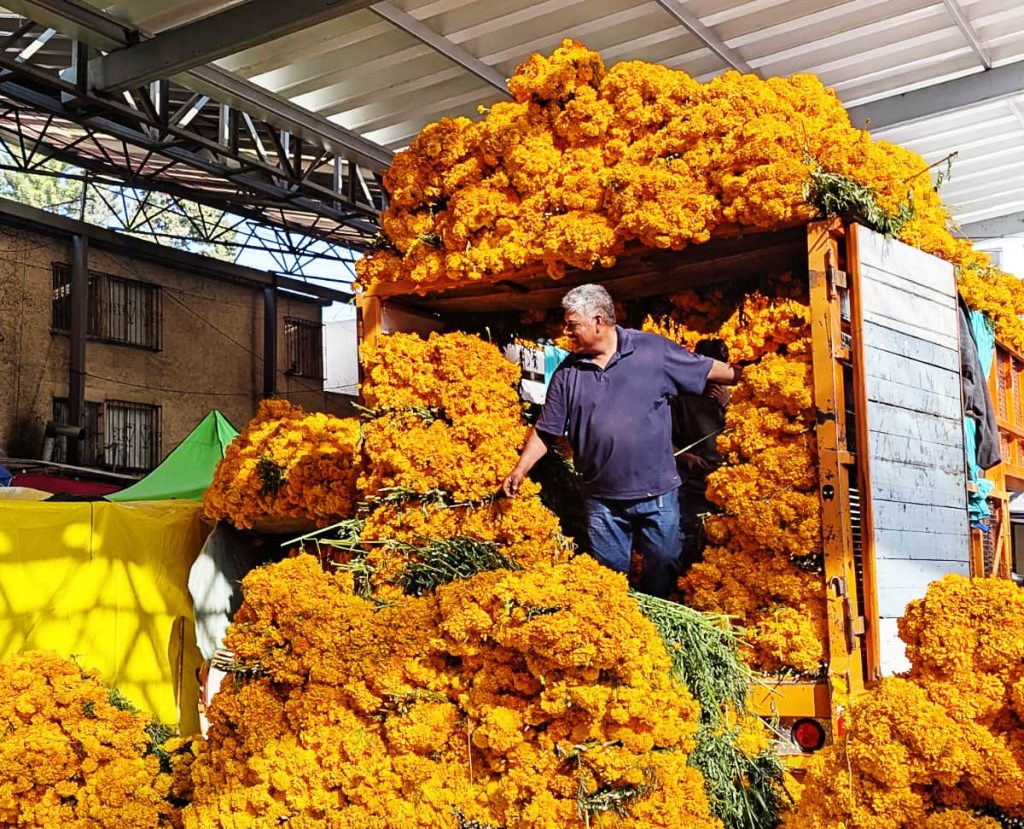
Marigolds, known as cempasúchil in Mexico, are the signature flower of the holiday. Their bright color and strong scent are believed to attract spirits and guide them to the altar which is why people create a path of petals leading from the doorway to the ofrenda.
Other traditional Day of the Dead flowers include baby’s breath, lilies, and cockscomb. Although it varies by region and individual family.
2. Photographs
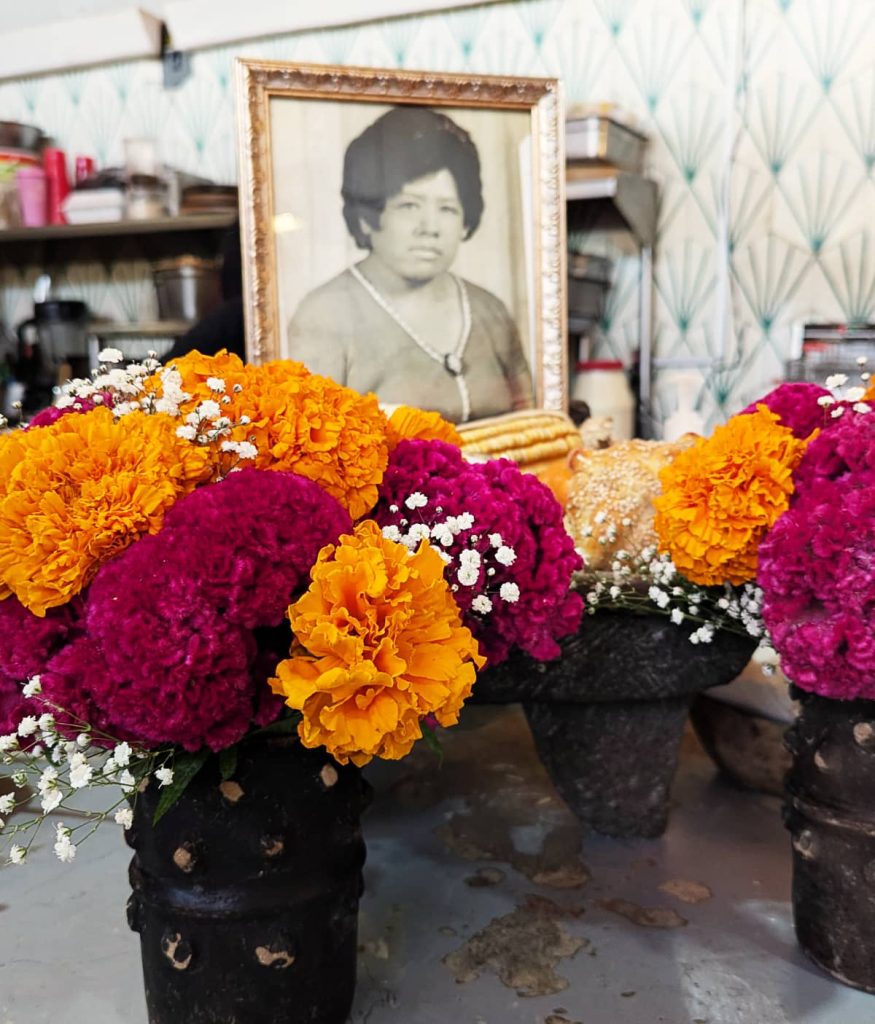
Contrary to popular belief, photos are not traditional. If you think about it, photos were a luxury item until recently. Most common families did not have photos of loved ones to adorn their altars.
Today, however, most families do include photos of loved ones who have passed on. They’re usually placed on the upper levels as a sign of respect.
3. Figuritas
Figuritas are miniature Mexican folk art that capture the connection between life and death. While some cultures see death as a ‘final’ stage of life, indigenous cultures view death as a stage of transformation and spiritual evolution.
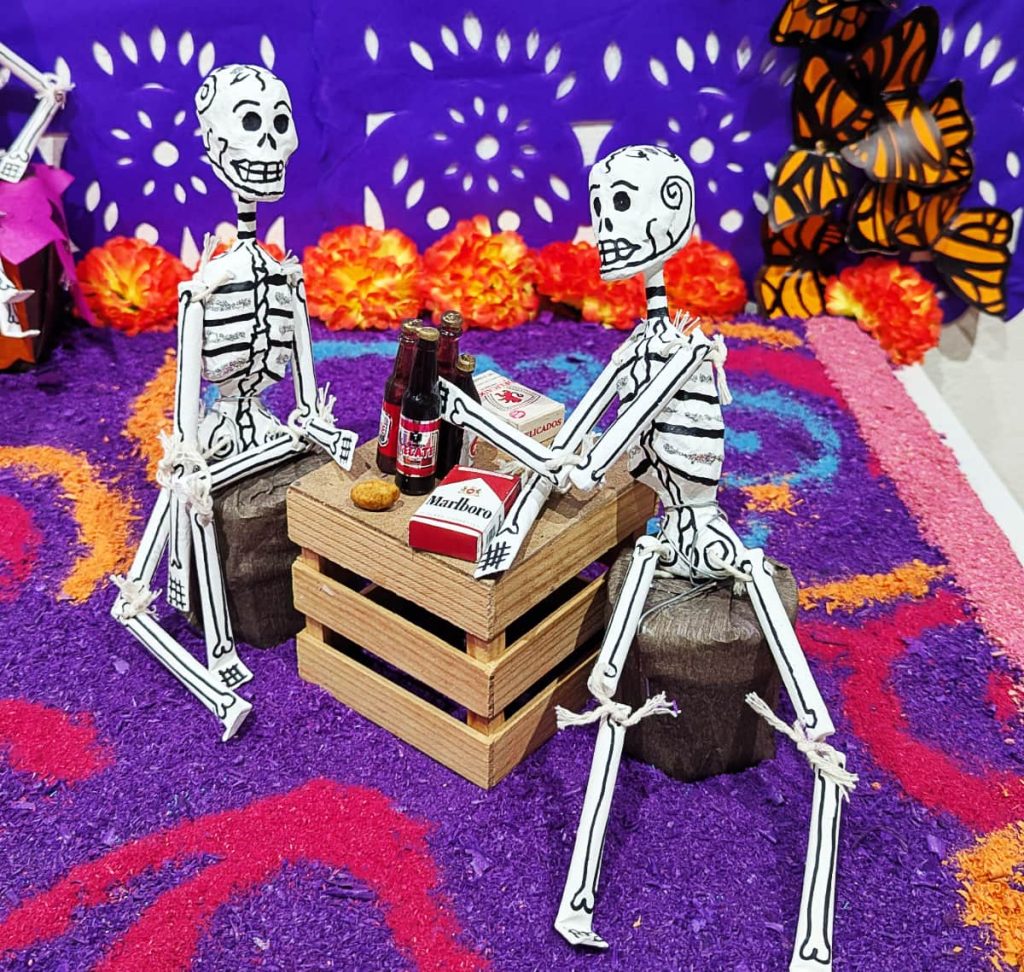
These handmade pieces are sold at local markets during the season and depict skeletons doing everyday things, like cooking, dancing, or hanging out. They are meant to evoke joy and humor while celebrating the life of our loved ones beyond death.
4. Personal Items
A personal item or keepsake from a loved one who has passed is a beautiful way to honor them on your altar. These can take many forms, but some of the ways we incorporated them in my family include adding a personal object like a favorite cup to drink out of or a trinket they cherished in life.
My grandmother used my grandfather’s calaca figurines (popular Mexican folk art of skeletons doing everyday tasks) to remember him this year.
While some cultures see death as a ‘final’ stage of life, indigenous cultures view death as a stage of transformation and spiritual evolution.
– Xochitl (author)
5. Candles
Candles represent fire, one of the four natural elements. They purify the space and light the way for spirits to find the altar and return home.
Some families light one candle per soul, while others place clusters or line the entire altar. Candles can be simple (like plain white veladoras) or intricate and shaped like vibrant marigolds, skulls, and other figures.
6. Food and Drinks

Food is essential to a Day of the Dead altar because it is believed that spirits consume the “essence” of the foods we offer them. It’s also a way for us to connect and share with the deceased, since we commonly eat the items placed on the ofrenda after the celebrations are over.
My mother is very particular about what food to put on a Day of the Dead altar each day as we build our altar in stages (more on that later). In the end it’s usually filled with:
- Fragrant Fruits – oranges, bananas, apples
- Traditional Food – tamales, mole, pan de muerto
- Drinks – water, hot chocolate, café de olla
- Traditional spirits – mezcal and tequila
7. Glass of Water
A glass of water is one of the first things placed on an ofrenda. It’s there to quench the thirst of the spirits after their long journey back to the living world. Water also serves as a symbol of purification, cleansing the space for the souls’ arrival.
8. Copal Incense
Copal is a tree resin that has been used in rituals and ceremonies since pre-Hispanic times. On a Day of the Dead altar, copal is burned to purify the space and guide spirits with its distinctive scent.

Traditionally copal is burned in a small clay incense burner called a sahumerio. If you’re unable to find it, a strong incense like frankincense works as a substitute.
9. Salt
Salt is believed to purify and preserve the spirits’ essence.

10. Papel Picado

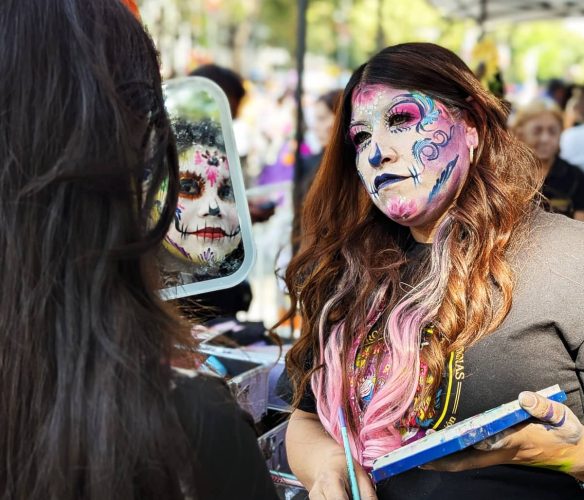
Papel picado adds movement and beauty to the altar, symbolizing the impermanence of life. These colorful perforated paper banners also represent air, another of the four natural elements.
During Day of the Dead, papel picado comes in seasonal colors like oranges, purples, and even black, often featuring skulls and skeleton figures.
11. Arch
Some altars include an arch made of cempasúchil flowers or reeds to symbolize the gateway between life and death. Whether to include one depends on regional customs and available space.
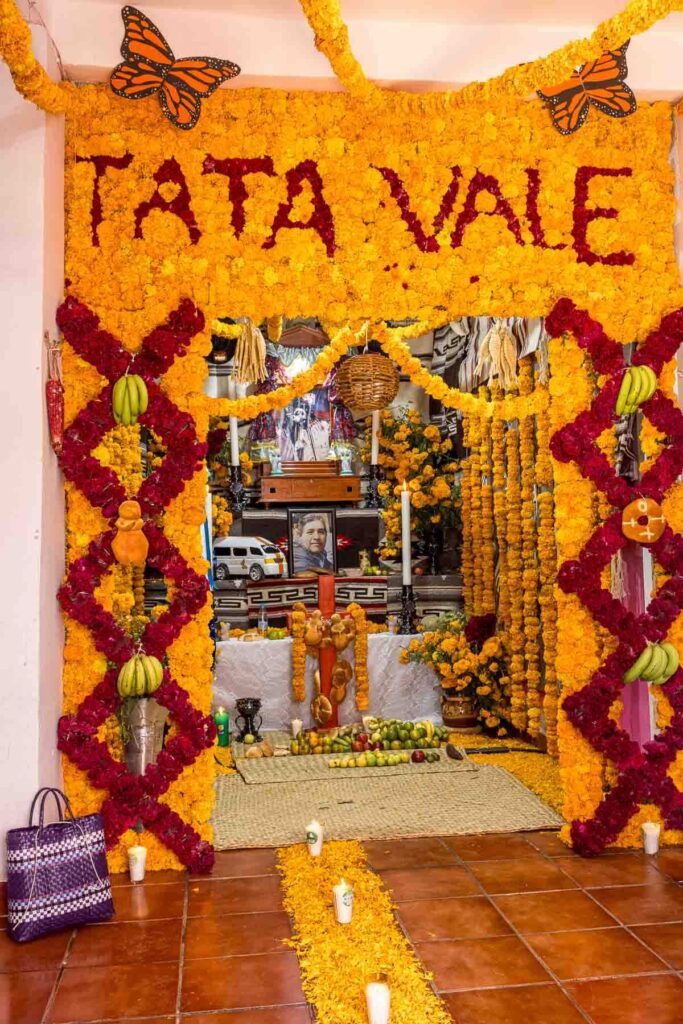
If you’re building an altar at home, the arch doesn’t need to be elaborate. A simple frame made from wood, wire, or even cardboard works as a base. Cover it with marigolds, papel picado, or whatever you have available. The symbolism matters more than the materials.
12. Petate (Rug)
A petate is a woven palm-leaf mat placed at the base of the altar. In rural areas, petates are still used for resting, sleeping, birth, and burial. On an ofrenda, it provides a sacred resting place for the spirits.
Petates also create a designated barrier between the altar and common space. It’s not unusual for families to pray at the altar, often reciting rosaries before removing objects from the altar.
13. Sugar Skulls
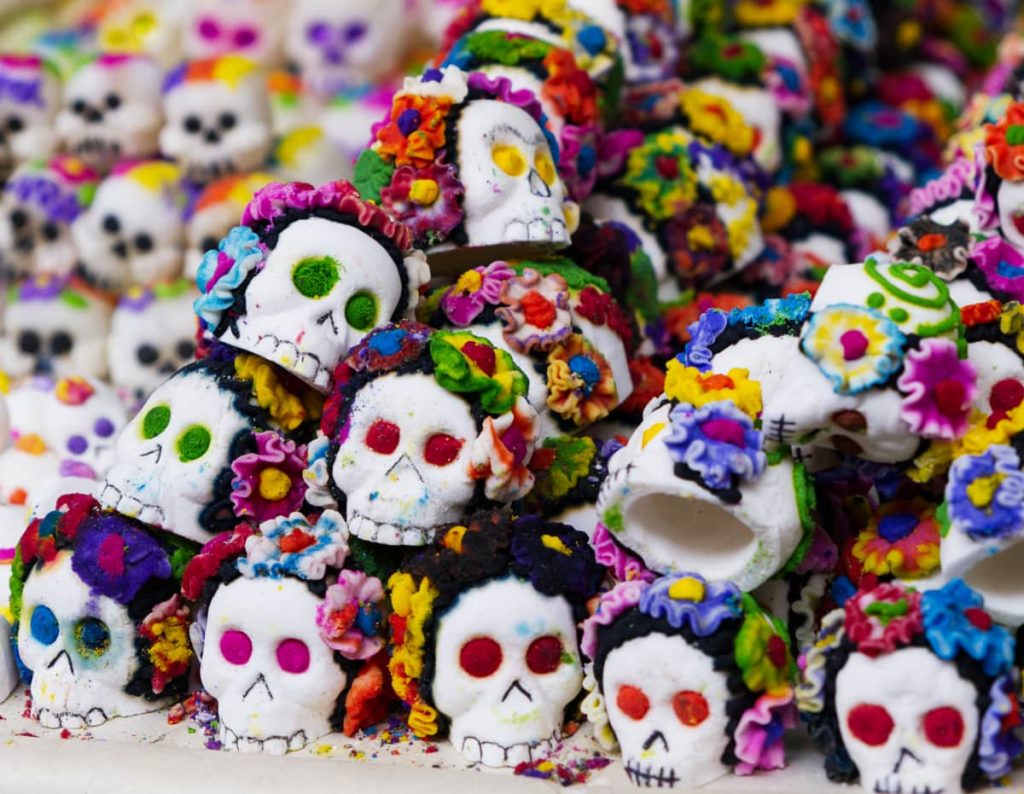
Sugar skulls are decorative elements meant to represent the departed. The origin of the use of sugar skulls on ofrendas is an interesting fusion of indigenous and Spanish traditions. Today sugar skulls represent joy, beauty and impermanence.
14. Monarch Butterflies

Monarch butterflies are iconic for Day of the Dead in Michoacán, where millions begin to arrive each year in early November. Many believe the butterflies carry the spirits of their ancestors returning home. Not every region includes them on the altar, but in Michoacán the connection runs deep.
If you have the opportunity, you should visit the monarch butterfly sanctuaries in Michoacán, ideally in January or February. It is one of the most incredible experiences in Mexico.
15. Pet Toys, Bowls, and Food
October 27th is when the spirits of deceased pets are believed to visit. If you’re honoring a pet, place their favorite food and water bowl on the lowest level of the altar. A photo or a toy they loved is a nice touch too.
How Many Levels Should a Day of the Dead Altar Have?

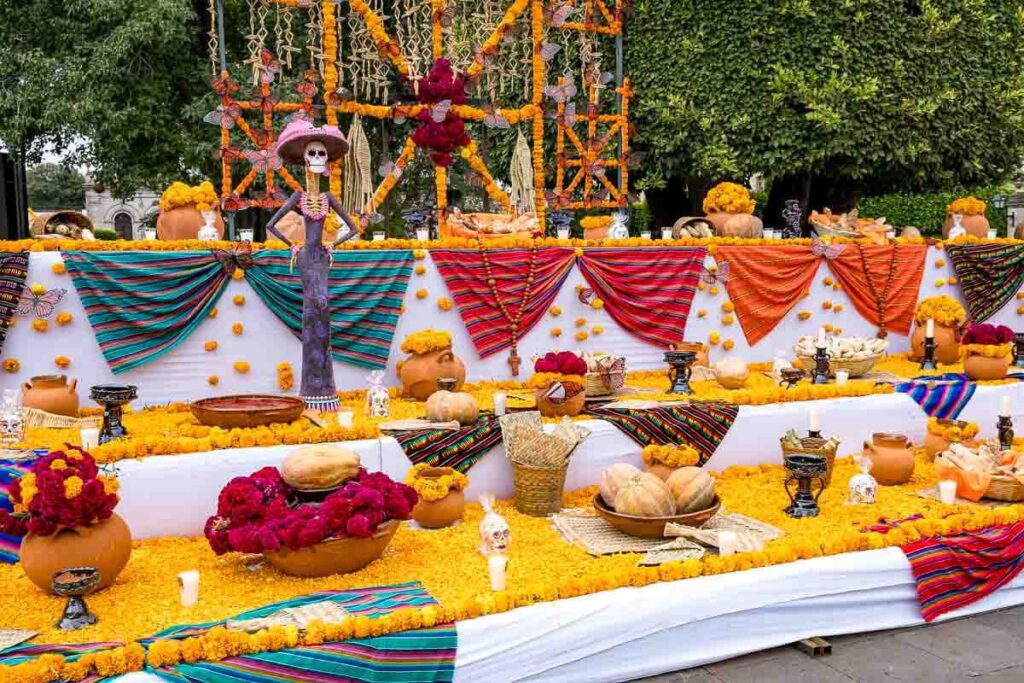
A traditional altar for Día de Muertos can have 2, 3, 7, or even 9 levels, depending on regional beliefs and available space. If you only have enough space for one level, it still holds meaning.
- 2 levels – Represent earth and sky. Simple and common for home altars.
- 3 levels – Symbolize heaven, earth, and the underworld. This is the most typical format today.
- 7 levels – Represent the stages the soul must pass through to reach spiritual peace.
- 9 levels – Less common but symbolic of the nine levels to reach the underworld in Mexica cosmology.
You’ll see large multi-level altars especially in places known for elaborate celebrations like Day of the Dead in Oaxaca and Michoacán.
How to Make a Day of the Dead Altar
Building an ofrenda is personal, but these steps will help you create a meaningful and visually balanced altar.
It is important to complete steps 1-7 before the arrival of the spirits. But most importantly, take your time. Many families build their altar gradually over several days.
- Choose a location. Select a quiet, stable area against a wall or table.
- Build your structure. Use boxes, crates, or stacked tables to create levels.
- Lay down fabrics. Cover the structure with a tablecloth.
- Place the photos. Put photographs on the top level to honor the deceased.
- Add candles and incense. Distribute candles around the altar and set a safe spot for copal.
- Arrange flowers. Use marigolds to frame the altar and create a path of petals if desired.
- Include water, salt, and symbolic elements. These basics welcome and purify spirits.
- Add food and drinks. Offer the favorite dishes, sweets, and beverages of your loved ones.
- Place personal belongings. Add memorable items that reflect personality and life.
- Decorate with sugar skulls and mini figurines. Use them to fill empty spaces and add color.
Questions About Altars of Day of the Dead
What are three common items often placed on an ofrenda?
Candles, water, and food are three common items placed on an ofrenda. These cover the basic needs of the souls during their journey from the afterlife to the world of the living. Candles provide a guiding light and purify the space, water quenches the spirits’ thirst, and food nourishes them after their long journey.
Can you put up an ofrenda if you’re not Mexican?
Yes, you can put up an ofrenda even if you’re not Mexican, as long as you do so respectfully. Día de Muertos welcomes remembrance, and many non-Mexicans participate as a way to honor their loved ones while learning about the tradition and its cultural roots.
How long do you leave the Day of the Dead altar up?
Typically, you leave a Day of the Dead altar up from October 27th to November 3rd. My family always makes an altar by October 28th at the latest and cleans up on November 3rd. The souls are believed to depart on November 2nd at midnight, so it´s best not to clean up before then.
Creating Your Day of the Dead Ofrenda
Making a Day of the Dead altar is an act of love rooted in centuries of tradition. Every candle, every offering, every marigold petal carries intention.
Now that you know what each element means, you can build an ofrenda that is thoughtful, authentic, and personal. Something that honors your loved ones and keeps them close, year after year.
