
Street Food in Mexico City: What and Where to Eat

Every time I visit Mexico City, street food is one of the things I look forward to most. As a melting pot, the city’s Mexican antojitos (little cravings) scene is unrivaled.
But devouring the best street food in Mexico City isn’t just a way to eat on the go. It’s how the city feeds itself, morning to night, from street carts and sidewalk stands.
It’s a cultural experience. And knowing what to order makes all the difference. After 10 years of traveling in Mexico, I’ve eaten my way through countless street carts and market stalls.
Below is everything worth knowing, primarily what to order and where to find it. I’ve also included options for a street food tour in Mexico City, a quick guide to vegetarian options, and tips so that you can order like a local.

This article may contain affiliate links. This means if you click a link on my website and make a purchase, I earn a commission at no additional cost to you. For full information, please see my disclaimer here.
1. Quesadillas
There’s a small debate about quesadillas in Mexico City: cheese or no cheese. You may be wondering, what’s a quesadilla without the queso? But hear me out.
A Mexico City quesadilla is often made with blue corn masa, stuffed with your choice of filling and cooked on the comal. The fillings are the star: tinga de pollo, flor de calabaza (squash blossoms), chicharrón prensado, potatoes with chorizo, and more.
I prefer to order a quesadilla without cheese because it lets the corn and filling shine. That said, you can absolutely get it with cheese. No judgment here.
Tip – In addition to stews, you’ll also see individual options like mushrooms, spinach, and huitlacoche (corn fungus). You can often ask to combine two, but it’s best to say champinones con (not y) espinaca. Otherwise you may receive two separate quesadillas. Ask me how I know 😅
2. Tlacoyos

Tlacoyos are one of my favorite street foods in Mexico City, and honestly, a big part of that is my love of ensalada de nopales. They’re also something you won’t find in many other cities in Mexico, which makes them worth seeking out when you’re here.
When you order a tlacoyo, the first decision is what goes inside: frijol, habas (fava beans), or requesón (a fresh cheese similar to ricotta). My favorite is frijol, but I’ve noticed a lot of locals lean toward habas. I usually order one of each.
The masa is stuffed to order, pressed into a thick oval, and cooked on the comal. It comes topped with shredded cheese and nopal salad. If you ask to omit the cheese, it becomes a solid option for anyone eating vegan in CDMX.
3. Torta
Oh, the Mexican torta. Don’t you dare call it a sandwich. It could never do it justice.
The torta is a Mexico City institution. It starts with the telera, a square roll that’s soft but sturdy enough to hold everything together.

It’s spread with a thin layer of bean paste and then layered with your choice of filling: milanesa (thin breaded meat) is my personal favorite, but chuleta and pierna are also classics.
Then come the extras: quesillo, avocado, and pickled jalapeños or chipotles in adobo. It’s a straightforward build, but when it’s done right, all the flavors blend and balance.
Skip the restaurants. Tortas are a quintessential Mexico City street food. The best tortas come from dedicated torta shops or street carts that do nothing else. They’re meant to be fast, simple, and eaten on the go.
4. Torta de Chilaquiles
I think it took me 7 trips to Mexico City before I finally tried this one. Carbs on carbs always sounded too heavy for breakfast. But I was wrong.
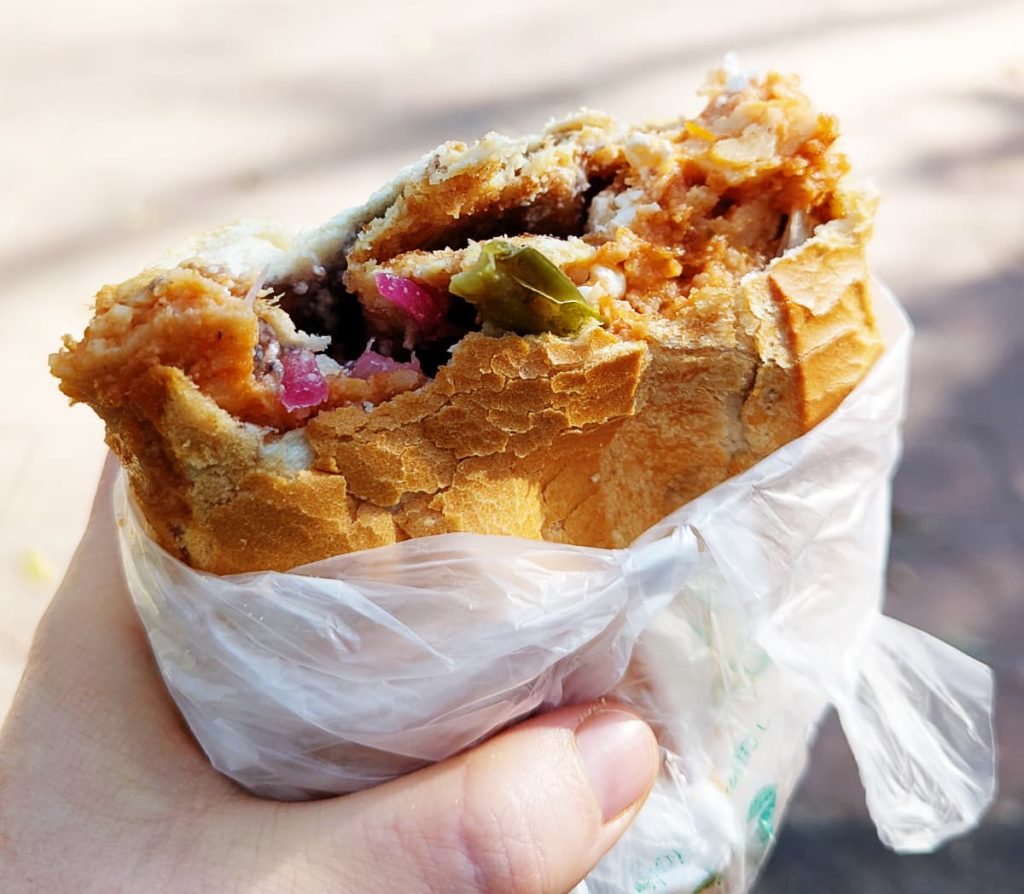
The torta de chilaquiles is quick comfort food, and it’s as Mexico City as it gets. For this torta, the bread switches to a bolillo. It has a crispier crust that holds up against the sauce without going soggy on you.
In Mexico, the bolillo carries enough cultural weight to have its own saying: “un bolillo para el susto,” (a bolillo for the fright). After an earthquake, bolillo memes flood the WhatsApp groups. But here, the bolillo is holding together one of my favorite breakfasts in the city.
To order, you’ve got two decisions to make:
- savory red or tangy green chilaquiles
- type of meat (chicken, cochinita pibil, or milanesa)
To make the torta, the bolillo is spread with a thin layer of beans before being stuffed with chilaquiles and the meat. It’s then topped with queso, crema, and salsa picante, though you can ask to skip any of those.
Tip – This one is messy. Keep it wrapped in the bag as you eat it.
And yeah, you better believe this innovation made my list of the best places to eat chilaquiles in CDMX.
Where to Eat Torta de Chilaquiles
📍 Tortas Catakil (map) – Delicious and the perfect location to explore Chapultepec Park after.
📍 La Esquina del Chilaquil (map) – The original torta de chilaquiles but be prepared to wait in line, especially on the weekends.
5. Gorditas
Forget what you think you know about gorditas. This isn’t the fried version peddled by the infamous fast food chain that’s been passing off as Mexican food for decades.

A real gordita is a crispy corn pocket stuffed with your choice of filling. When I first ate them after hiking Peña de Bernal in Queretaro, the filling options were various guisados (stews). And the contrast between the crunchy exterior and the soft, filling inside made my mouth sing.
Gorditas are more common outside of Mexico City, but when you find a good one (see below), it’s worth stopping. And I have yet to see them in the city but blue corn gorditas are worth seeking out.
During a trip with my mom, she had her first blue corn gordita from a street stand when we were exploring Atotonilco on a day trip from San Miguel de Allende. She literally still talks about them.
Street Food Tours in Mexico City
A street food tour is a great way to hit the ground running. Plus a local guide takes the language barrier off the table entirely and gives you context to the food you’re eating.
I recommend booking your Mexico City street food tour at the beginning of your trip so you can return to your favorite spots and then explore more on your own. Here are my top picks:
🚴♂️ Street Food Bike Tour – Bike through Condesa and Roma Norte to Chapultepec Park while eating your way through the city’s best antojitos and finishing with a proper michelada.
🌶️ Beginner’s Guide to Mexico City Street Food – A small group walking tour that’s ideal for first-time visitors who want a guide to help with ordering and walk away with food recs for the rest of their trip.
🌽 Vegan and Vegetarian Street Food Adventure – A dedicated plant-based tour through four neighborhoods, proving that eating meat-free in Mexico City doesn’t have to be limiting.
6. Pambazo
Think of a pambazo as the torta’s dramatic cousin. The bread is soaked in a guajillo chile sauce and pressed on a griddle until the outside is crispy and red, giving it a unique color and texture.
The traditional filling is potatoes and chorizo, though these days you’ll find plenty of variations. It comes topped with lettuce, crema, and cotija cheese, with the option to add red or green salsa.
The pambazo is also a staple of Independence Day celebrations on September 16th. The red of the guajillo-soaked bread mirrors the colors of the Mexican flag, making it a patriotic snack.
Where to Eat Pambazos
📍 Los Pambacitos de Benjamin Franklin, Condesa (map)
7. Street Tacos
Mexico City street tacos are in a league of their own. The variety alone is staggering: al pastor, suadero, carnitas, bistec, mixiote, tacos de guisado, de la cabeza, and my personal favorite, arrachera. And that’s just scratching the surface.
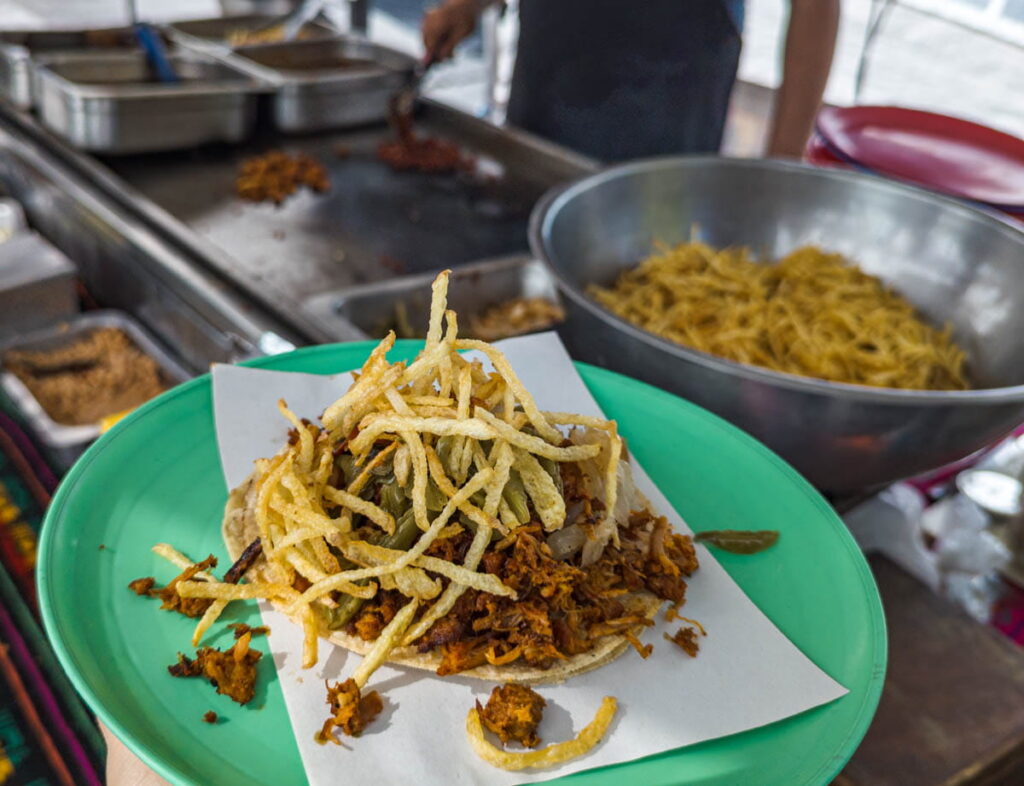
The meat is piled onto a small corn tortilla, usually doubled up so it doesn’t fall apart, and topped with onion and cilantro. Then you add your preferred salsas.
But my favorite part? Alongside the salsas, most taco stands have a variety of toppings you can freely add to your tacos. We’re talking french fries, nopal cactus, beans, sliced cucumbers, and more.
You’ll find taco stands throughout the day and into the early hours of the morning. Keep in mind, some of the best aren’t inside restaurants. They’re street carts that have been doing the same thing for decades.
Where to Eat Tacos
Ufff there’s too many to list them all. Check out my guide to the best tacos in Mexico City (organized by location).
But here are a few of my top picks:
📍 Arrachera Tacos el Tigre, Narvarte Poniente (map)
📍 Taquería el Gato Volador, Roma Norte (map)
📍 Tacos Los Caramelos, Roma Sur (map)
📍 Tacos Los Paisas, Centro (map)
8. Tacos de Canasta
Tacos de canasta deserve their own category among tacos. Traditionally, you’ll find them in the mornings served from a basket strapped to the back of a bicycle, with a container or two of salsa hanging off the sides.
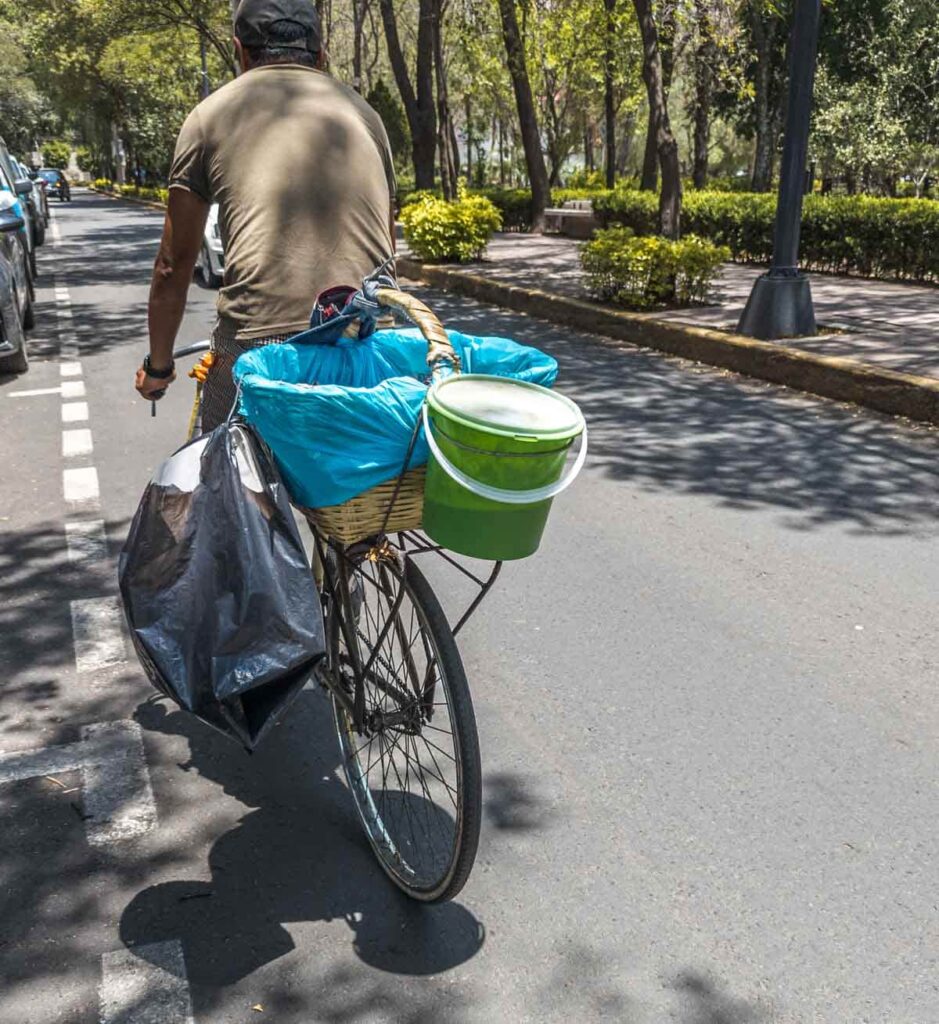
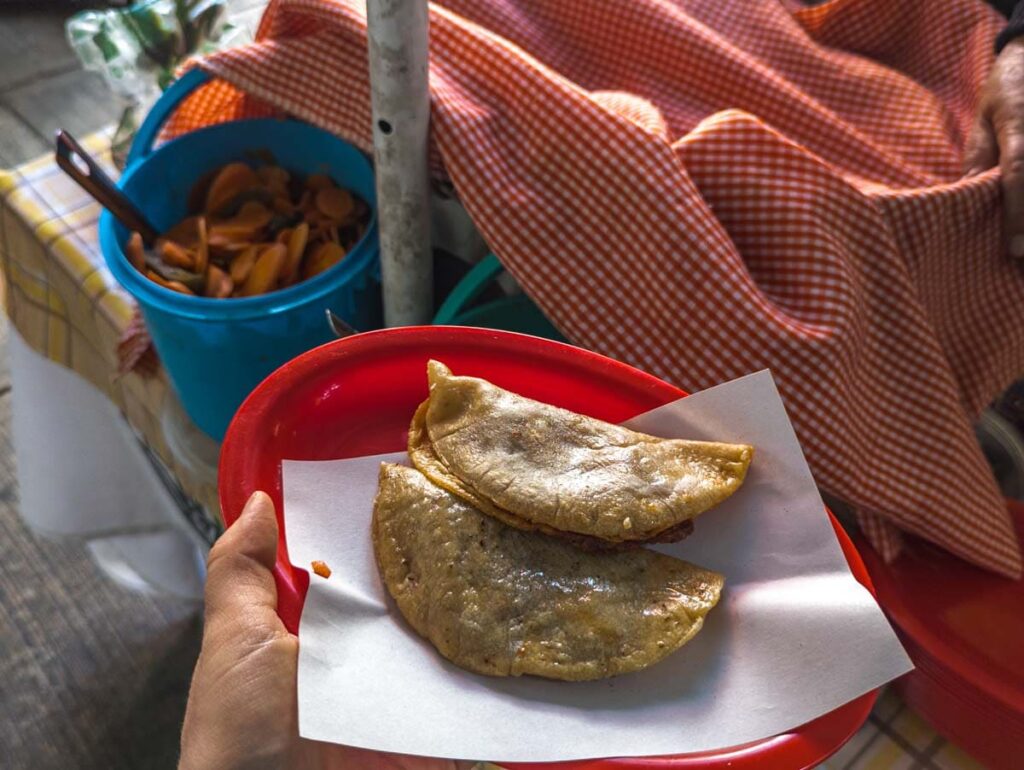
Tacos de canasta are small and pre-filled with your choice of filling: frijoles, potato, chicharrón prensado, and adobo beef are typical. They are then layered in the basket and covered. The steam that builds up makes the tortillas soft and pliable. It’s a simpler, humbler eat than a standard street taco, but that’s exactly the point.
These days you’ll also find taco de canasta stands, which makes them easier to track down. But the bicycle vendors are still out there if you keep your eyes open.
9. Huaraches
The huarache takes its name from the flat leather sandals made in Mexico. The size and shape are spot on. The texture, thankfully, is not.
A good huarache is thin and crispy, stuffed with a small amount of beans. The plate is served with grilled onions, nopal cactus, and avocado, alongside your choice of protein: everything from suadero and cecina to costillas and sometimes liver and onions.
Where to Eat Huaraches
📍 Huaraches La Señora Mely, Mercado Jamaica (map)
10. Flautas
If you know tacos dorados, you’re one step away from a flauta. Think of a flauta as a tacos dorados that went through a growth spurt. Longer and crispier, hence the name which means flute.
In Mexico City, you’ll see flautas almost as long as your forearm. They’re stuffed, rolled thin, and fried. They come topped with queso, crema, and salsa, which is really all they need.
11. Barbacoa de Borrego
Barbacoa de borrego instantly became one of my favorite Mexican traditions when I moved to Mexico 10 years ago. You can find it on Saturdays and Sundays throughout the city, and one of my favorite places to eat barbacoa in Mexico City starts serving it as early as Thursday 🤤

Borrego (lamb) or chivo (goat) is traditionally slow-cooked in the ground until the meat is falling off the bone. As it cooks, the drippings collect in a pot below, developing into a rich consomé with the additions of rice and garbanzo beans.
Weekend barbacoa is a ritual for many Mexican families, who order by weight to take home. But if you’re eating barbacoa street side, I recommend ordering a taco or two and a small bowl of consomé. Then add onion, cilantro, lime, and salsa to your liking.
12. Tamales Oaxaqueños
If you spend any time in Mexico City, you’ll hear the tamales before you see them. A recorded voice crackles through a loudspeaker in the mornings and evenings: “tamales oaxaqueños…”
Mexico City is full of these iconic sounds, from knife sharpeners to gas delivery trucks. And if you’re interested, this animation of the sounds of Mexico City captures them better than I can.
The tamale vendor pedals a tricycle cart with two large drums full of steamed tamales that are served warm, or as the vendors say, calientitos.
Traditional Oaxacan tamales are filled with mole negro and wrapped in banana leaves instead of corn husks. But at these carts you’ll find a variety of options. The sweet tamale filled with cream cheese and blackberries is also worth trying at least once.
13. Elotes, Esquites, and Dorilocos
I love Mexican street corn. It comes in three forms: elotes, esquites, and dorilocos.
Elotes are the classic: a grilled corn cob smothered with mayo, cheese, a squeeze of lime, and salsa to your liking. Esquites take the same ingredients but in a cup with a little broth. When you stir the cup everything mixes together and gets slightly creamy, which is why they’re my go-to.


Then there’s dorilocos. As the name implies, things get a little crazy. Choose your bag of chips (Doritos, Tostitos, etc). They’ll open it lengthways and load it with cooked corn and all the elote toppings.
Some vendors go extra locos by adding cucumber, shredded jícama, and hot nuts, like the ones I tried at the Tolantongo hot springs (it’s a great day trip from CDMX).
Where to Eat Elotes, Esquites, and Dorilocos
I’ll be honest, I haven’t found a standout version of any of them in the city, including the ones at Mercado Jamaica (pictured above) which I’d heard great things about. But I’m sure they exist. So if you see an appealing street cart selling elotes while you’re exploring, give them a try.
14. Fruit, Fresh Juice, + Agua Fresca
Fresh fruit is one of my favorite afternoon snacks after a day of exploring the city. It’s refreshing, convenient, and exactly what you need when you’ve been walking for hours.
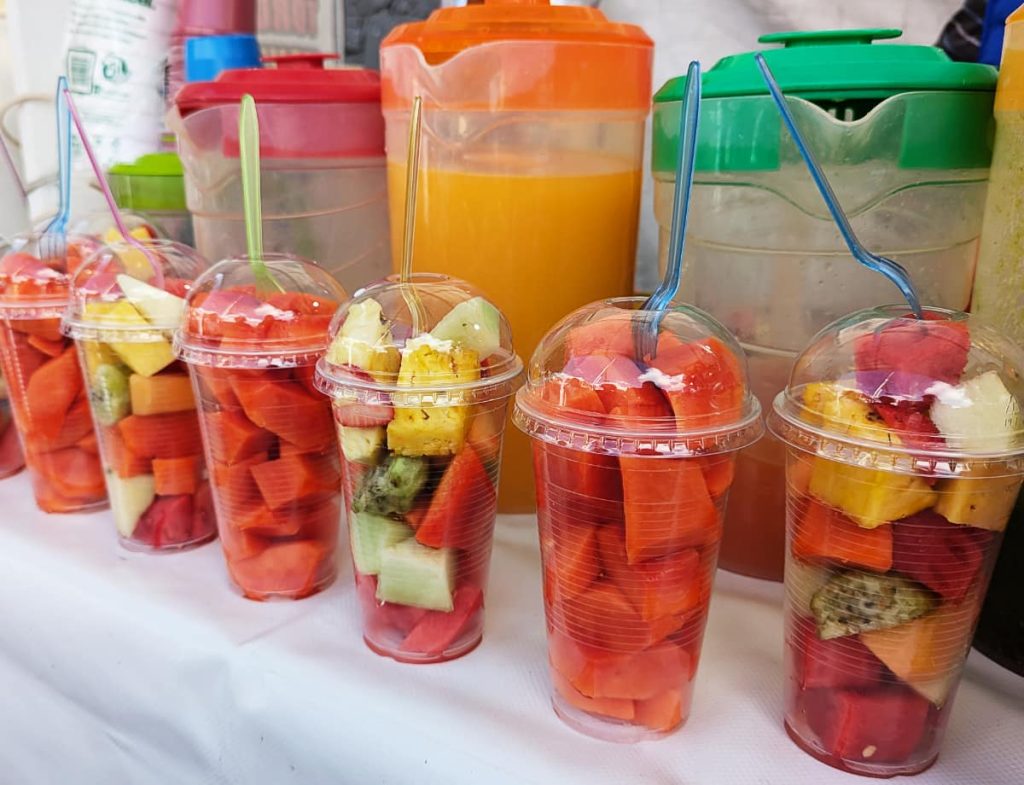
Sometimes you’ll find a cart selling nothing but mango or jicama on a stick with chamoy. But often you’ll find street carts that offer a mix: pineapple, papaya, watermelon, jícama, cucumber, and more. I always go for fruit with jícama and/or cucumber. And if you want the full experience, say yes to the lime, salsa, and/or tajín.
These stands often sell fresh juice too, though you’ll find more variety at the markets in Mexico City. I’ve also stumbled across a guy selling nothing but fresh pressed OJ from a grocery cart on a morning walk. That’s Mexico City street food ingenuity in a nutshell.
Then there are agua frescas. Essentially drinks made from fruit, jamaica flowers, tamarind, or rice. These are typically pre-sweetened, though occasionally you’ll find a vendor who adds the simple syrup per order, in which case you can ask for sin dulce or poco dulce.
15. Churros
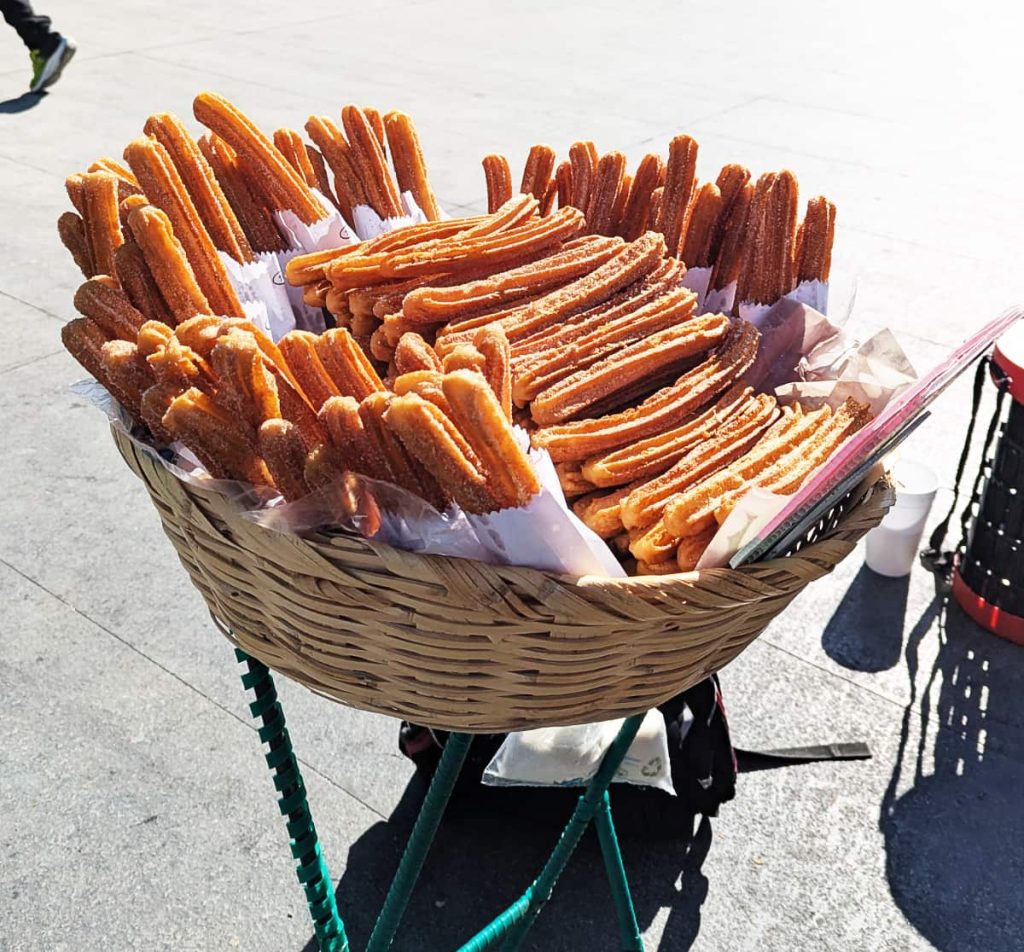
Churros are one of the most popular sweet street foods in Mexico City. I’ll be honest with you: I’m not a fan. On their own, I find them a bit dry and boring.
You’ll find vendors selling them from baskets on the street. But in my opinion you should head to a churrería where you can elevate your churros by ordering a chocolate or dulce de leche dipping sauce.
A Guide to Eating Street Food in Mexico City
Every area delivers. All of the neighborhoods in Mexico City have good street food. In fact I was surprised to find some of the best street food in Roma Norte.
You can also find a reliable concentration of street vendors near the metro stations. You’ll become familiar with them quickly if you follow my guide to getting around Mexico City.
Timing. Tacos de canasta and tortas de chilaquiles are morning foods. Barbacoa de borrego is a weekend tradition. And you’ll hear the cart for tamales oaxaqueños in the mornings and evenings.
Ordering. If a street stand is particularly busy, it can feel overwhelming. But the rhythm is simple. Figure out what they’re serving, make eye contact, and place your order. Don’t feel rushed to move on. It’s completely normal to eat one or two items and then order more.
Spanish phrases. “Qué hay?” (What do you have?) is a good opener. “Con todo?” (asking if you want onions and cilantro) and “para llevar” (to go) or “para aquí” (eating here) will cover most situations.
Seating. Most street food is eaten standing at the counter or on the sidewalk. Some stands have a few plastic benches. Either way, it’s part of the experience.
On tipping. Tipping at street carts is not customary in Mexico. If you see a tip jar, a few pesos is a kind gesture. But importing a full tipping culture here isn’t something I’d encourage. Over time it leads to foreigners receiving preferential treatment, which isn’t good for the local dynamic.
Cash vs card. Some street food vendors are cash only. And while more and more accept cards, you should have cash just in case. Always carry small bills and coins. Handing over a 500 peso note at a street cart may be a problem.
Is it safe to eat street food in Mexico City?
Eating street food in Mexico City is generally safe, and in 10 years of traveling in Mexico I’ve only gotten sick once. The best precautions are simple: make sure the food looks fresh and follow the crowds. A busy cart full of locals is a good sign. Vendors rely on their reputation, and locals don’t want to get sick either.
That one time I got sick, I was in a beach town and I knew immediately where it came from. A rotating spit of al pastor that had been sitting in the sun too long. It didn’t look appealing and I ordered it anyway. The lesson: if something doesn’t look right, trust your instinct and move on. There’s always another street cart in Mexico City.
Vegetarian Street Food in Mexico City
Tlacoyos and quesadillas are the most accessible options for vegan and vegetarian street food in Mexico City. Fillings commonly include beans, mushrooms, spinach, flor de calabaza (squash blossoms), and quelites (wild greens). Tacos de guisado are another solid option, as a variety of guisados are veggie-based.
If you’re looking for vegan street food, consider joining the no-cheese side of the quesadilla debate. For tlacoyos, order it stuffed with frijol or habas, sin queso. It’s such a small part of the topping you won’t be missing out.
Where to Eat Vegetarian Street Food
📍 Paxil, Roma Norte (map) – Plant based seafood with flavors that mimic Mexican mariscos. It’s truly mind blowing.
📍 Gatorta, Roma Norte (map) – Vegan tacos, tortas, and desserts
⭐ Book this vegetarian and vegan street food tour which takes you through 4 different neighborhoods.
What is the most popular street food in Mexico City?
Tacos are without a doubt the most popular street food in Mexico City, and in this city they earn that reputation. But the Mexico City street food scene goes far beyond tacos. Tortas, tlacoyos, quesadillas, gorditas, and flautas are all staples you’ll find on streets across the city. And the list goes on…
Wrapping Up Mexico City Street Food
The best street food in Mexico City doesn’t hide. It’s outside the metro stations, along the major thoroughfares, and on the sidewalks of every neighborhood. This is how 20+ million people in the city eat every day. And now you know where to start.